Key Takeaways
- Cortisol is an essential awakening hormone whose natural morning spike is an adaptive feature, not a toxic glitch.
- Clinical studies link burnout to a flattened daily cortisol rhythm and suppressed melatonin—not simply having "too high" cortisol numbers.
- Medical reviews find zero scientific backing for viral "cortisol detox" cocktails (orange juice, coconut water, salt) and warn of self-misdiagnosis.
Let's spill the tea no cap: cortisol lowkey has the worst PR of any hormone on the internet right now. "Cortisol face." "Cortisol belly." "Cortisol detox" cocktails made of orange juice, coconut water, and sea salt. If you believed social media, you'd think cortisol is basically a toxin your body accidentally makes.
Spoiler alert: it's not. Cortisol is one of the most essential hormones you have, and actual endocrinology says the problem was never the hormone itself. It's whether your body releases it on the schedule it was built for.
1. What Cortisol Actually Does
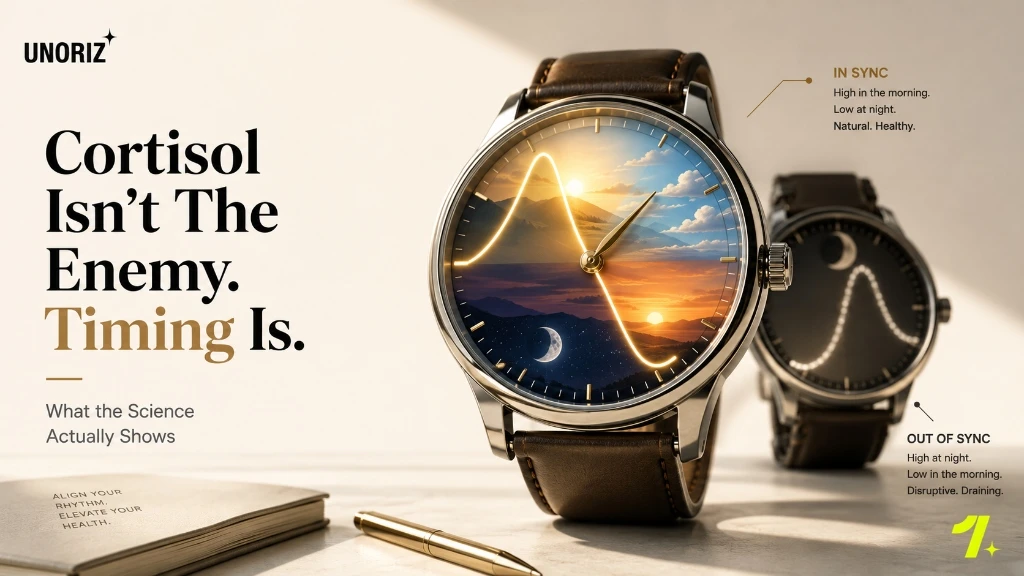
Cortisol isn't just a "stress hormone." It's your main character awakening signal. It follows a strict daily circadian rhythm—rising steeply in the early morning to get you moving, then gradually falling throughout the day until it hits its lowest baseline late at night. That morning spike (the Cortisol Awakening Response) is a feature, not a glitch. Without it, you'd struggle to feel alert at all.
A neuroendocrinologist at Oregon Health & Science University put it plainly: cortisol is adaptive and protective within its normal range and circadian rhythm. Cortisol itself isn't the villain. Chronic dysregulation of its rhythm is. That distinction matters way more than viral wellness content gives it credit for.
Healthy cortisol peaks 30–45 minutes after waking up to fuel alertness, then smoothly tapers down by evening so melatonin can trigger deep sleep. The problem is a flat line, not the morning peak.
2. The Plot Twist Nobody Talks About
Here's where it gets genuinely surprising, and honestly kind of ironic given how wellness influencers talk about this. When doctors actually diagnose real clinical cortisol disorders, they don't just look at whether the number is high. They look for loss of the normal daily rhythm.
One hallmark of Cushing's syndrome, an actual medical condition tied to hypercortisolism, is that cortisol fails to drop at night the way it's supposed to, staying elevated when your body should be winding down.
And burnout—the exact thing "cortisol face" content claims to warn you about—is classically associated with a flattened daily cortisol rhythm, and sometimes even low cortisol, not high. Read that again. The internet's villain-era cortisol narrative has the direction partly backwards. It's not that your cortisol is too high; it's that the rhythm has gone flat.
A 2025 review of healthcare workers linked burnout directly to flattened cortisol curves and night-shift circadian disruption.
A 2026 clinical review found zero evidence that OJ + coconut water + salt cocktails lower cortisol or reduce fatigue.
A 2025 systematic review of burnout in healthcare workers backs this up. Across 14 studies, burnout was consistently linked to suppressed melatonin, cortisol dysregulation, and circadian misalignment, especially in night-shift workers who showed both greater circadian disruption and higher burnout scores than day-shift colleagues. It's giving timing problem, not toxin problem.
3. So Why Does "Cortisol Detox" Even Exist?
Because a flattened, mistimed rhythm feels bad, and "detox" sounds like a fixable villain story. But cortisol is not a toxin waiting to be flushed out of your system.
A major 2026 medical review specifically addressed this viral trend and found no scientific support for "cortisol cocktails"—typically orange juice, coconut water, and salt—claiming to eliminate fatigue or stress. That's functioning physiology being marketed as a problem to purge.
The same review pointed out real documented harms from the trend, including self-misdiagnosis, wasted spending, and people delaying an actual medical evaluation because they assumed a drink or a supplement would fix what's really a circadian rhythm and lifestyle issue. That's the actual cost of treating cortisol like the enemy instead of understanding the timing piece.
4. What Actually Disrupts the Rhythm
If cortisol itself isn't the villain, what is? Mostly the stuff that throws off your internal clock in the first place:
Irregular Sleep & Wake Times
Prevents your morning cortisol spike from happening on a consistent, predictable schedule.
Chronic, Sustained Stress
Acute stress spikes cortisol temporarily and normalizes, but ongoing unmanaged stress is what flattens the daily rhythm over time.
Night Shift Work & Social Jetlag
Both directly tied to circadian misalignment and higher burnout rates in clinical research.
Poor Light Hygiene
Skipping bright morning sunlight and getting blasted by screen light late at night suppresses melatonin and misaligns cortisol timing.
5. What The Evidence Actually Supports Doing
Forget the gimmick drinks. Here is what current endocrinology and sleep research actually support:
- Keep a consistent wake time: Your morning cortisol spike depends on a predictable daily signal, not a random schedule.
- Get real morning light exposure: 10–15 minutes of outdoor sunlight sets the timing of that healthy cortisol peak.
- Address chronic stress directly: Sustained stress flattens the rhythm; adaptogens and supplements aren't miracle fixes.
- Skip "cortisol detox" products: Save your money—lifestyle consistency remains the real baseline according to peer-reviewed data.
- Consult a clinician for severe symptoms: If you have persistent fatigue or major mood shifts, talk to a doctor rather than self-diagnosing off TikTok trends.
6. The Bottom Line
Cortisol isn't out to get you. It's one of the most useful, adaptive hormones your body makes, and demonizing it misses the point entirely.
The real issue was never the hormone—it's whether your daily rhythm, sleep timing, stress load, and light exposure keep that hormone running on the schedule your body was built for. Fix the timing, and cortisol goes right back to doing exactly what it's supposed to do.
7. Sources
- TIME Magazine: 9 Myths About the 'Stress Hormone' Cortisol
- HealthMaxxing: "Cortisol Face" and the Cortisol-Detox Trend: What the Evidence Says
- PMC (PubMed Central): Melatonin and Cortisol Suppression and Circadian Rhythm Disruption in Burnout Among Healthcare Professionals
- SLEEP (PMC): Rhythms in Cortisol Mediate Sleep and Circadian Impacts on Health
- Hormonic: Cortisol Face, Cortisol Belly & Co: The Honest Fact Check
8. Frequently Asked Questions
Is cortisol actually bad for you?
What is "cortisol face" and is it real?
Does high cortisol cause burnout?
Do "cortisol detox" drinks actually work?
How do doctors actually diagnose a real cortisol problem?
Does night shift work affect cortisol rhythm?
What actually helps regulate cortisol rhythm naturally?
Topics & Tags

Rishabh Kumar
Author & Lead ResearcherFounder & AI Product Strategist
7+ years building digital products, AI workflows, and human optimization systems for 20+ global clients including Google, Samsung, and Microsoft.