Key Takeaways
- Bright morning sunlight (2,500 to 10,000 lux) triggers a 20% to 40% higher peak cortisol awakening response, naturally boosting energy and setting your evening sleep countdown.
- A systematic review of 22 studies found light therapy significantly reduced time awake after sleep onset and advanced circadian sleep-wake schedules.
- Clinical meta-analyses demonstrate morning light has a 0.54 to 0.62 effect size on mood and depression—delivering antidepressant-level benefits as early as 2 weeks.
Everyone's out here buying $200 red light panels and cold plunge tubs while the actual highest leverage biohack is free, takes 10 minutes, and is sitting right outside your window. Morning sunlight might be the single most underrated thing you can do for your sleep, mood, and energy, and the research backing it up is honestly stronger than half the stuff people pay for.
1. What Morning Light Actually Does to Your Body
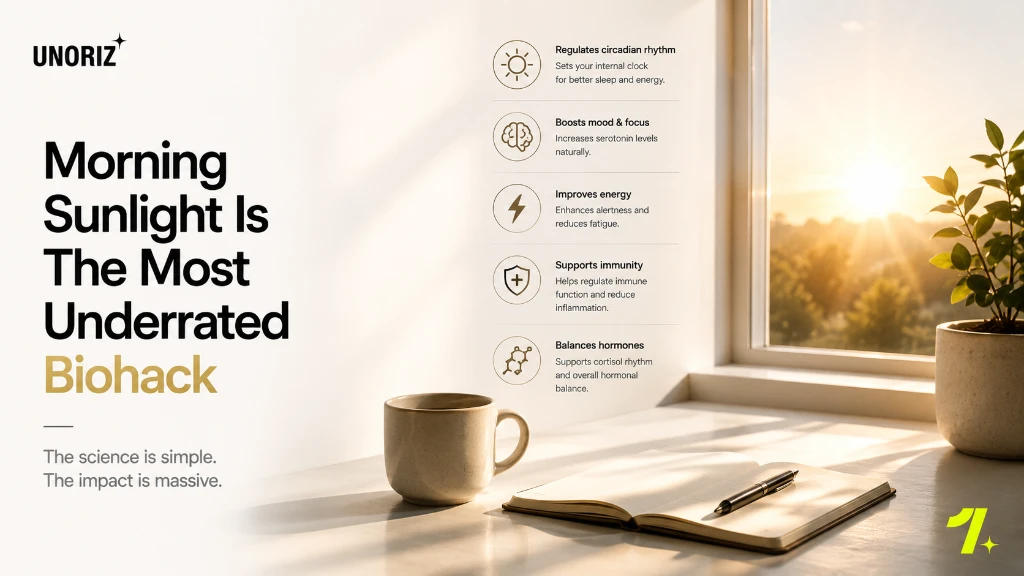
Your body runs on an internal clock called the circadian rhythm, and light is the main signal that sets it. When sunlight hits your eyes in the morning, it triggers something called the cortisol awakening response (CAR), a natural spike in cortisol that gives you energy and alertness to start the day. This isn't the "bad" cortisol people talk about with chronic stress. It's the version that's supposed to happen every morning.
People exposed to 2,500 to 10,000 lux morning light showed 20%–40% higher peak cortisol in the first hour after waking compared to dim light.
Light received within the first 2–3 hours after waking produced the strongest, most stable effect on the body's natural cortisol pattern.
That morning light exposure also suppresses melatonin, your sleep hormone, at exactly the right time. Melatonin then builds back up naturally as the day goes on, peaking at night. This is the whole mechanism behind why morning light helps you fall asleep easier that same night—it's setting the countdown clock for when your body should start feeling sleepy again.
2. The Actual Research, Not Just Vibes
This isn't just internet wellness talk. Bright light exposure has real clinical research behind it, mostly studied as "bright light therapy."
It Measurably Improves Sleep
A systematic review and meta-analysis covering 22 studies and 685 participants found light therapy significantly improved time spent awake after initially falling asleep. Morning light exposure specifically advanced people's sleep-wake rhythms, shifting their schedule earlier in a healthy, natural way.
Real Antidepressant-Level Mood Effects
Meta-analyses on morning bright light treatment for depression found medium effect sizes: 0.54 for seasonal depression and 0.62 for non-seasonal depression. An effect size around 0.5 to 0.6 is considered a genuinely meaningful clinical effect, not a placebo-level nudge. Antidepressant-level effects showed up as early as two weeks into daily morning light exposure.
A related meta-analysis on light therapy in dementia populations found small-to-medium positive effects across the board, including a reduction in depression symptoms and real improvement in sleep quality and sleep latency (how fast people fell asleep).
"It's dose-dependent. Getting a strong enough light signal for at least one hour in the morning was associated with better sleep and lower depression scores, while dimmer light exposure below that threshold didn't produce the same benefit."
3. Why Indoor Light Doesn't Cut It
Here's the thing most people get wrong. They assume sitting near a bright window or their office lights counts as "getting light." It really doesn't come close. Outdoor light, even on a cloudy day, is dramatically brighter than almost any indoor lighting setup—direct sunlight especially.
Your eyes and brain need that outdoor-level intensity to trigger the strongest version of the cortisol and melatonin response. This is exactly why light therapy boxes used in clinical studies run at 10,000 lux, engineered specifically to mimic what your body is designed to get from being outside.
Standing by a window with your coffee is a nice habit, but it's not doing the same job as actually stepping outside.
4. How to Actually Do This (Without Overcomplicating It)
- Step outside within 60 minutes: Get outside within the first hour of waking up if you can. This is when your body is most sensitive to the light signal.
- Aim for 10 to 20 minutes: You don't need to sunbathe—just be outside with your eyes open (no sunglasses) and unobstructed by window glass.
- Consistency beats intensity: Getting a short dose every single day works better than one long session once in a while, since your circadian rhythm responds to regular signals, not occasional extremes.
- Stack with existing habits: Pair it with something you already do—walking the dog, your morning commute, or drinking coffee outside.
- Overcast days still count: On cloudy or rainy days, just stay out a little longer. Even overcast daylight is far brighter than indoor lighting.
5. The Bottom Line
Morning sunlight isn't just a wellness trend—it's one of the most clinically studied, zero-cost interventions out there for sleep, mood, and daily energy. The mechanism is straightforward, the effect sizes for mood are genuinely meaningful, and the biggest barrier isn't cost or complexity—it's just remembering to go outside. If you're looking for one habit to actually start with instead of adding another supplement to your shelf, this is it.
6. Sources
- PubMed: Light Therapy in Insomnia Disorder: A Systematic Review and Meta-Analysis
- ScienceDirect: The Effects of Light Therapy on Sleep, Depression, Neuropsychiatric Behaviors, and Cognition Among People Living With Dementia
- ScienceDirect: The Effect of Bright Light Therapy on Major Depressive Disorder: A Systematic Review and Meta-Analysis
- Frontiers in Public Health: Circadian Light Therapy and Light Dose for Depressed Young People
- ClinicalTrials.gov Protocol: Morning Light Treatment for Traumatic Stress: The Role of Amygdala Reactivity
- Oura Ring: Benefits of Morning Sunlight and How to Make It a Habit
7. Frequently Asked Questions
How long should I get morning sunlight for it to actually work?
Does morning sunlight really affect mood, or just sleep?
Can I get the same benefit from sitting near a window indoors?
What time of day gives the strongest effect from sunlight?
Does morning sunlight actually help me fall asleep faster at night?
What if it's cloudy or rainy outside?
Is morning sunlight a replacement for light therapy boxes or supplements?
Topics & Tags

Rishabh Kumar
Author & Lead ResearcherFounder & AI Product Strategist
7+ years building digital products, AI workflows, and human optimization systems for 20+ global clients including Google, Samsung, and Microsoft.