Key Takeaways
- Google ranks pages by accumulated authority and backlinks over years, whereas AI answer engines cite by extractability—how easily a system can pull a clean, self-contained answer right now.
- A multi-platform study of 6.8 million citations found that only 11% of cited domains overlap across ChatGPT, Perplexity, and Claude for identical queries, invalidating one-size-fits-all AEO.
- Each platform uses distinct retrieval logic: ChatGPT leans heavily on established brand trust and freshness; Perplexity reranks small candidate pools leaning on community sources; Claude prioritizes high precision and primary technical sources over raw domain authority.
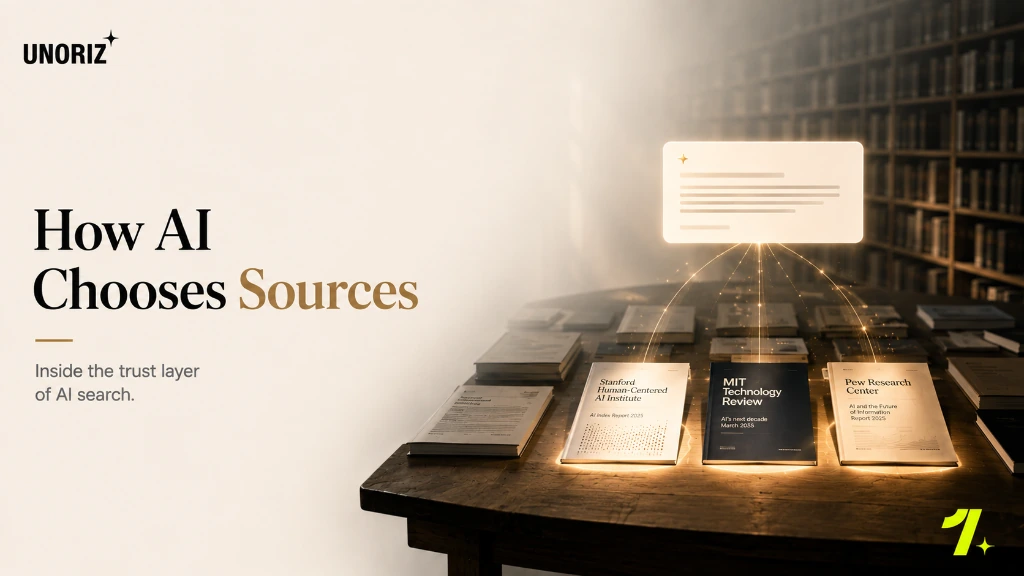
Google ranks pages. AI search engines pick winners. That's the real shift happening right now, and most people are still optimizing for the old game. If you want to understand where content visibility is actually heading, you need to understand how ChatGPT, Perplexity, and Claude choose who gets quoted, because it's not the same rulebook as classic SEO, and it's not even the same rulebook across the three of them.
1. The Core Difference From Google
Google ranks by popularity signals built up over years: backlinks, click behavior, and domain history. AI answer engines work differently. They cite by extractability, meaning how easily a system can pull a clean, self-contained, trustworthy answer out of your content right now.
A page can rank on page one of Google and still never get cited by an AI engine, because ranking rewards authority built over time, while citation rewards a clear, well-structured answer built for this exact moment.
That distinction is the whole ballgame. Here's how it plays out differently across the three big platforms.
Google rewards cumulative domain history and backlink equity. AI answer engines prioritize passage-level extractability—the computational ease of lifting self-contained, verifiable answers directly into synthesized generation.
2. ChatGPT: Selective, Freshness-Sensitive, and Trust-Brand Heavy
ChatGPT leans on a search partner plus licensed publisher relationships to pull in live information. It's known for being highly selective and freshness-sensitive, meaning it favors recently updated, clearly authoritative sources over older or generic ones.
In practice, that means heavy leaning toward big trust brands: Wikipedia, established news outlets, and sites with a long track record of accuracy. If your content is new, unlinked, and without an authorship trail, ChatGPT has less reason to trust it over a source it already recognizes.
3. Perplexity: Retrieve, Rerank, Cite Only the Best Few
Perplexity works more like a live research assistant. It typically pulls in a handful of candidate pages per query, somewhere around 5 to 10, reranks them for quality, and ends up citing only 3 to 4 in the final answer.
That reranking step reportedly weighs relevance, domain authority, freshness, and source diversity, and it leans harder on trust platforms like Reddit and reference-style content for many everyday queries. This is why Perplexity often surfaces community discussion right alongside traditional publisher content, something Google's classic ranking system almost never does at the same weight.
4. Claude: Precision Over Volume
Claude behaves differently from both. Cross-engine research tracking citation behavior found Claude tends to cite fewer sources per response than Perplexity, but the sources it does pick score higher on relevance match rather than raw authority alone.
In plain terms, Claude is more willing to cite a smaller, less famous source if that source answers the question more precisely than a bigger, more generic one would. Claude also shows a strong pull toward primary sources and structured, well-organized technical writing, content that lets it extract one clean, self-contained answer instead of piecing one together from scattered paragraphs.
5. The Number That Explains Why “One-Size-Fits-All AEO” Doesn't Work
Here's the stat that should reshape how anyone thinks about this. An analysis of more than 6.8 million AI citations found that only 11% of cited domains appear across multiple platforms for identical queries.
That means the source ChatGPT trusts for a question is very often not the same source Perplexity or Claude trusts for that exact same question. Each platform is running its own trust logic, its own retrieval index, and its own preferences. Winning visibility on one doesn't automatically win it on the others.
Across 6.8 million tracked citations, roughly 89% of cited domains are unique to a single AI platform for the same prompt—confirming that ChatGPT, Perplexity, and Claude execute fundamentally distinct trust algorithms.
6. What All Three Actually Have in Common
Even with different mechanics, a few trust signals show up across every major AI engine:
- Clear, structured writing: Content organized with direct definitions, clean headers, and passage-level clarity is easier for any of these systems to extract cleanly, which makes it far more likely to get quoted.
- Named authorship and real credentials: Structured data connecting an author to their actual expertise gives these systems a concrete trust signal to lean on, rather than guessing.
- Freshness: Recently updated content consistently outperforms stale pages across ChatGPT and Perplexity specifically, since both weigh recency in their retrieval logic.
- Crawl access: This one is easy to overlook, but it matters enormously. Research shows a large share of indie and smaller sites are technically invisible to AI crawlers, since a lot of sites block AI crawler access even though it's allowed by default. If a crawler can't reach your page, none of the other signals matter at all.
- Cross-source corroboration: These systems increasingly check whether multiple independent sources agree on a claim before treating it as trustworthy enough to cite, which rewards accuracy and punishes single-source, unverifiable claims.
Passage extractability, verified author schema, content recency, explicit AI crawler permissions (GPTBot, ClaudeBot, PerplexityBot), and multi-source consensus represent the shared foundation of answer engine citation.
7. What This Means If You're Building Content to Get Cited
The old SEO move was chasing backlinks and domain authority above almost everything else. That still matters for Google, but for AI citation specifically, the smarter move is building content that's genuinely easy for a machine to lift cleanly: direct answers near the top, real named expertise, current information, and open crawl access.
No cap, the brands treating this as just “SEO with extra steps” are going to keep losing visibility to the ones actually building for how these systems read and trust content differently, platform by platform.
8. The Bottom Line
Google ranks pages with one dominant algorithm. AI search engines each run their own separate trust logic, and only about 1 in 9 cited sources show up consistently across platforms.
ChatGPT leans on established brand trust and freshness. Perplexity reranks a small pool fast and leans into community sources. Claude prioritizes precision and structure over raw authority. If your content strategy still treats “getting cited by AI” as one single target, you're optimizing for a version of the internet that no longer exists.
9. Sources
- The Prompt Insider: How Each AI Platform Decides Which Brands to Cite (2026)
- Conductor: How AI Engines Choose and Cite Sources: A 7-Month Analysis
- GrackerAI Insights Hub: AI Citation Patterns Explained
- Chudi.dev: How AI Answer Engines Decide Which Sources to Cite: 6 Factors
- Analytics Agent: How ChatGPT, Claude, and Perplexity Decide Which Analytics Tools to Cite (2026)
10. Frequently Asked Questions
1. Do AI search engines rank sources the same way Google does?
2. Does the same content get cited equally across ChatGPT, Perplexity, and Claude?
3. Why does Perplexity cite Reddit so often?
4. What makes Claude different from ChatGPT and Perplexity when picking sources?
5. Can a page rank well on Google but still never get cited by AI search engines?
6. Does content freshness actually matter for AI citations?
7. What's the most overlooked factor in getting cited by AI search engines?
Topics & Tags
Rishabh Kumar
Author & Lead ResearcherFounder & AI Product Strategist
7+ years building digital products, AI workflows, and human optimization systems for 20+ global clients including Google, Samsung, and Microsoft.